October 3, 2026
Slowdown — Omaha, Nebraska
Messa • Uncle Acid & The Deadbeats
Words and photos by Adam Tibbott
Some concerts overwhelm you with production. Others barely need any at all.
On a warm fall Nebraska night, Messa and Uncle Acid & The Deadbeats brought two very different approaches to darkness to Omaha’s Slowdown. One relied almost entirely on the music to build its atmosphere. The other turned the room into a psychedelic nightmare.
Together, they made for one of the strangest and most immersive pairings I’ve seen in quite some time.
The crowd itself was almost as interesting as the bands. Looking around Slowdown, there didn’t seem to be one easily defined demographic. Old hippies stood alongside young stoners. Scenesters mixed with college students. Doom fans, psychedelic-rock devotees and people who looked like they might have wandered in from entirely different corners of Omaha’s music community somehow all ended up in the same room.
It made sense, though. Neither Messa nor Uncle Acid & The Deadbeats fits comfortably into a single box.
Messa Let the Music Set the Scene
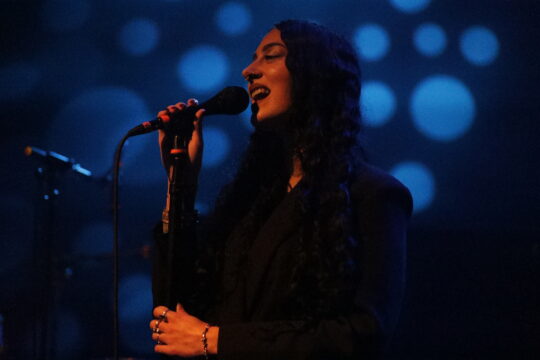
Messa took the stage with almost nothing distracting from the music.
There was no elaborate stage production and no attempt to manufacture an atmosphere through excessive visuals. Behind the band was a simple black backdrop bearing the Messa logo.That was enough.
In fact, anything more might have taken away from what makes Messa so captivating.The Italian band’s self-described “Scarlet Doom” draws from doom metal influences but refuses to remain confined by it. Psychedelia, blues, progressive rock, jazz and gothic textures drift through their music, sometimes within the same song. Live, those different elements become even more apparent.
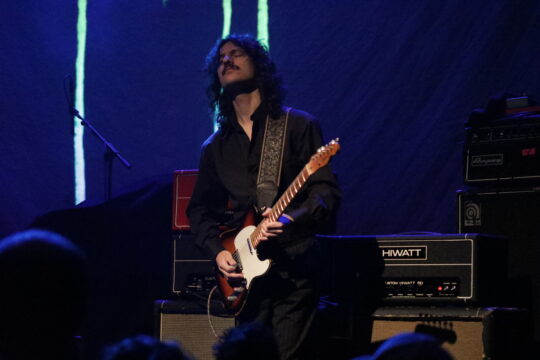
The result was less like watching a traditional doom-metal set and more like watching a mood slowly materialize around the room.
Sara Bianchin’s vocals were particularly important to that effect. Against the heaviness of the band, her voice could be haunting and delicate one moment and commanding the next. The shifts between quieter passages and massive riffs gave the performance room to breathe.
Messa didn’t need to tell us where to look.They simply played, and the music did the rest.
Uncle Acid: Welcome to the Nightmare
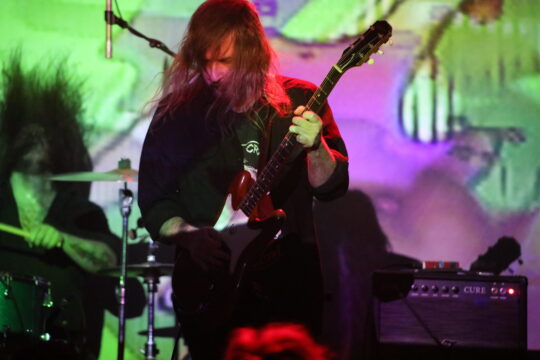
Then Uncle Acid & The Deadbeats took essentially the opposite approach.
If Messa created atmosphere by showing us almost nothing, Uncle Acid created it by showing us far too much.
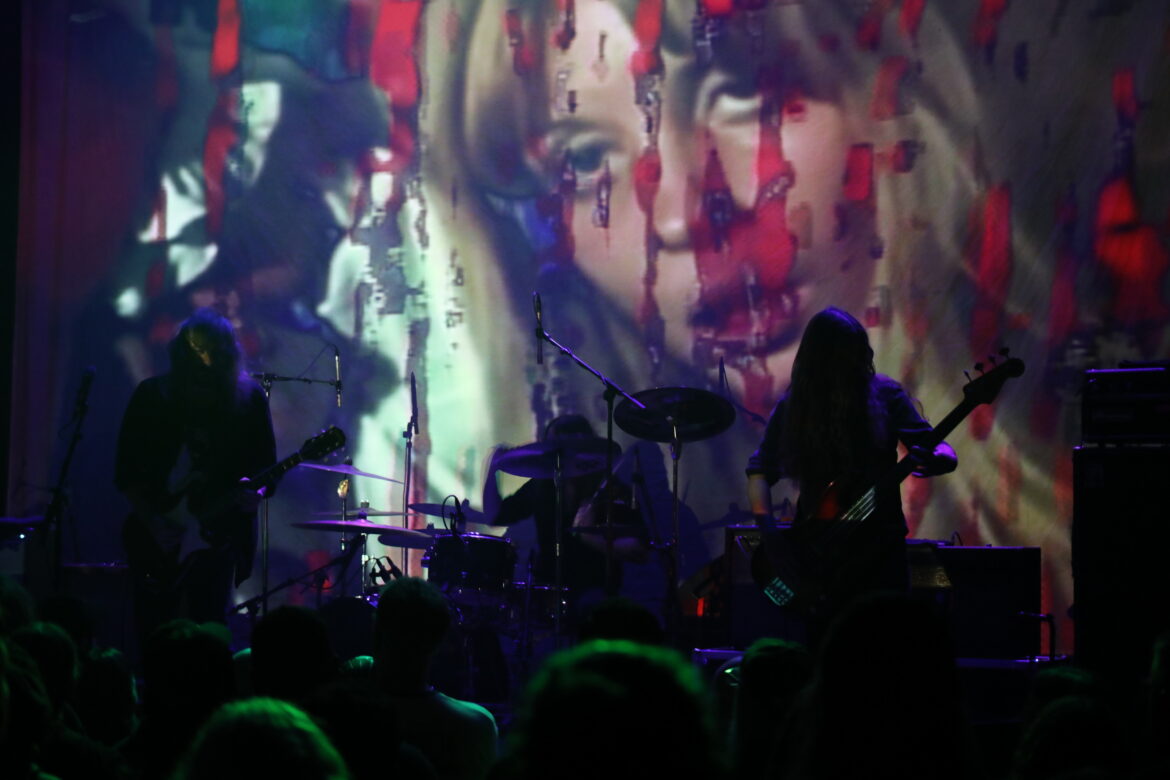
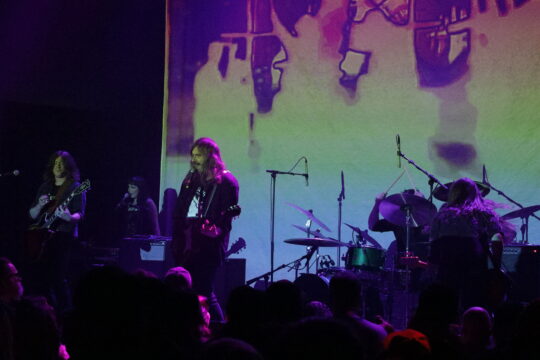
Behind the band, a screen erupted with a constantly shifting collage of nightmare fuel: B-horror imagery, psychedelic patterns, unsettling faces and flashes of imagery that appeared and disappeared quickly enough to make you question exactly what you had just seen.
At one point, I swear Sharon Tate’s face was stitched somewhere into the projections.
Whether I actually saw her or my brain was simply trying to make sense of the sensory overload almost seems beside the point.That uncertainty was part of the experience.
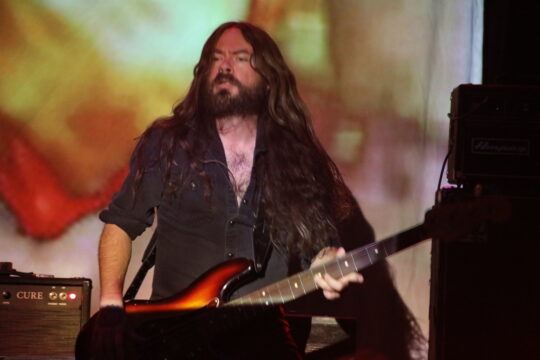
Uncle Acid’s music already feels like something recovered from a dusty reel of film that probably should have remained locked in somebody’s basement. Their combination of Sabbath-sized riffs, garage-rock grime, psychedelic melodies and deceptively catchy vocal harmonies has always carried an undercurrent of something sinister.
Live, those projections pushed that feeling considerably further.It wasn’t merely psychedelic.It was psychedelic horror.
The imagery recalled the visual language of old exploitation films, cult cinema and battered VHS tapes. The sort of imagery that becomes increasingly disturbing the longer you stare at it. Combined with the band’s hazy riffs and hypnotic repetition, the entire room began to feel disconnected from 2026.
For a while, Slowdown could have existed sometime around 1971.
And possibly in a much more dangerous timeline.
Two Different Ways Into the Darkness
What ultimately made the evening work so well was how differently these two bands approached essentially the same objective.
Messa created atmosphere through restraint.
Uncle Acid created atmosphere through sensory overload.
Messa gave us a black backdrop and allowed the imagination to fill in everything around it. Uncle Acid filled that same imaginary space with murder, blood, horror movies, psychedelic colors and images that seemed designed to lodge themselves somewhere uncomfortable in the subconscious.
Yet neither approach felt gimmicky.
Both served the music.
That may also explain the unusually diverse audience gathered at Slowdown. There were decades of musical history embedded in these performances: doom metal, Black Sabbath, psychedelic rock, blues, gothic music, garage rock and the remnants of late-1960s counterculture all colliding with generations of listeners who discovered those sounds through very different paths.
Old hippies. Young stoners. Scenesters. College students.
For a few hours, everybody belonged to the same strange little congregation.
By the end of the night, the pairing of Messa and Uncle Acid & The Deadbeats made perfect sense.
One band demonstrated how little you need to create an atmosphere.The other demonstrated just how far you can push one.
And somewhere between Messa’s elegant darkness and Uncle Acid’s flickering nightmare, Omaha’s Slowdown became a wonderfully strange place to be.