Men At Work with Toad the Wet Sprocket and Shonen Knife
August 8, 2026
Harrah’s Stir Cove, Council Bluffs, Iowa
Words, and photos by Adam Tibbot
There are concerts built around a new album. There are tours designed to introduce audiences to what comes next. And then there are nights when looking backward feels every bit as important as looking ahead.
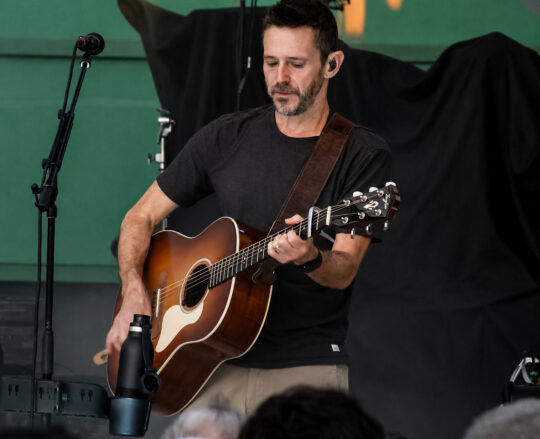
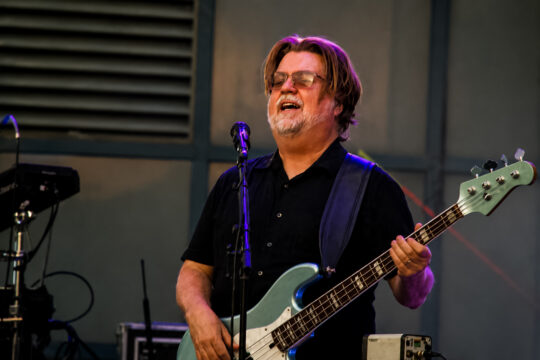
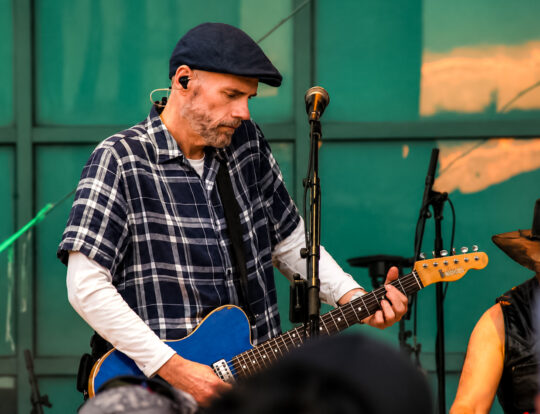
On August 8, Harrah’s Stir Cove became something of a musical time machine as Men At Work, Toad the Wet Sprocket and Shonen Knife brought together nearly five decades of music — and several generations of fans — for one of the summer’s most unexpectedly nostalgic evenings. Perhaps the most remarkable thing was simply looking around the crowd.
Baby Boomers came to revisit the early 1980s with Men At Work. Gen X and Millennials were transported back to the alternative-rock explosion of the early 1990s with Toad the Wet Sprocket. Meanwhile, younger Gen Z and Gen Alpha fans were getting an introduction to Shonen Knife, the pioneering Japanese rock trio whose infectious combination of punk, pop and rock helped open Western ears to a style of Japanese music that would become increasingly familiar to later generations of anime and J-rock fans. The music came from different countries, different decades and very different corners of the rock world, but somehow it all belonged together.
For Omaha-area music fans with long memories, Shonen Knife’s appearance carried some particularly wonderful history. The band first performed in the Omaha metro in December of 1993, opening for Nirvana alongside The Breeders at the long-gone Ak-Sar-Ben Coliseum. More than three decades later, seeing Shonen Knife return to an Omaha-area stage felt like reconnecting with a surviving piece of the alternative-rock era that helped define an entire generation.
But treating Shonen Knife as merely a nostalgic artifact would completely miss the point. From the moment they took the Stir Cove stage, the band was relentlessly cheerful, energetic and infectiously fun. Stories introducing various songs gave the audience little glimpses into their personalities, while their invitation for the crowd to participate during “Sweet Candy Power” quickly transformed spectators into willing accomplices.
For many people in attendance, understanding every lyric wasn’t necessary. The vast majority of Shonen Knife’s lyrics may be sung in Japanese, but their performance provided a reminder of something remarkably simple: music doesn’t require translation. A melody doesn’t need subtitles. A great beat doesn’t care what language you speak. Throughout their set, people bounced, bopped and moved along with songs they may never have heard before. Smiles appeared throughout the crowd as the band’s enthusiasm worked its way farther and farther back from the stage.
More than forty years after Shonen Knife formed in Osaka, their music still carries the same wonderfully uncomplicated sense of joy. On a bill filled with memories, they weren’t simply reminding people of the past. They were winning over new fans in real time.
Toad the Wet Sprocket was a different kind of rediscovery. Despite being an unmistakable part of the soundtrack of the early 1990s, the band had somehow flown under my radar for decades. They never truly disappeared, even with a lengthy hiatus separating chapters of their career, and hearing those songs again in 2026 revealed just how deeply some of them had embedded themselves into the musical landscape.
The band’s Omaha history stretches back more than three decades, including an early appearance at the legendary Ranch Bowl in 1992. That alone gave their Stir Cove performance another connection to a local music scene whose venues, bands and audiences have changed dramatically over the intervening years.
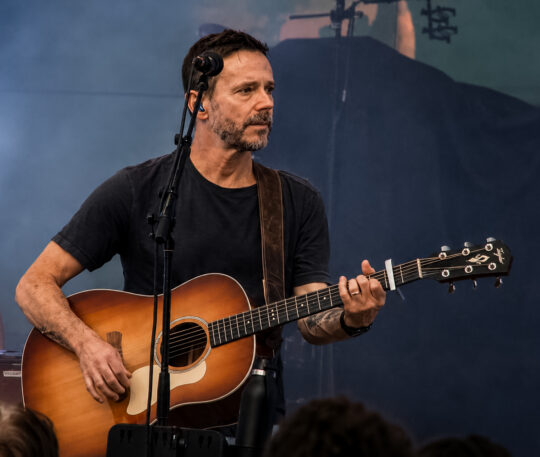
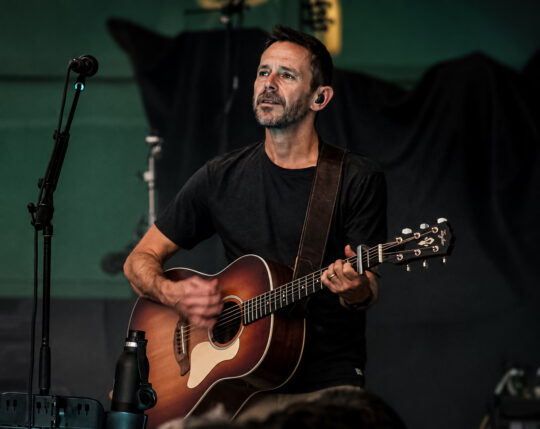
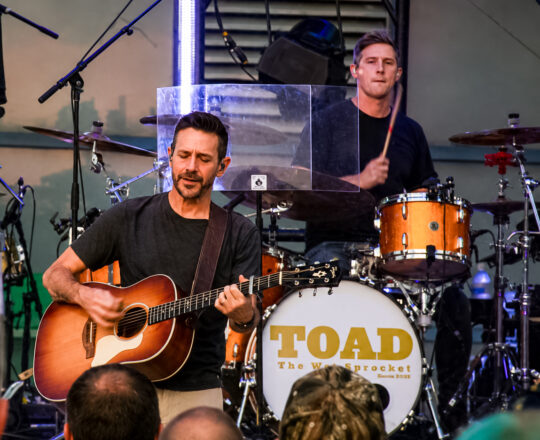
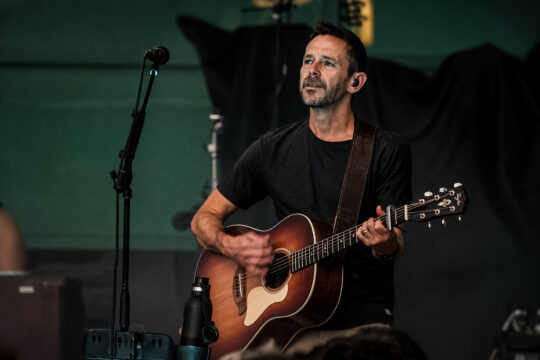
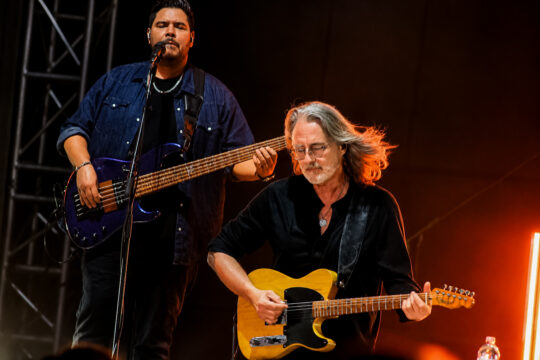
Where Shonen Knife actively invited the audience into their world, Toad the Wet Sprocket generally took the opposite approach. There wasn’t much conversation. There didn’t need to be. For most of the set, the band simply let the songs do the talking. And the crowd knew exactly what to say back. At several points, thousands of voices nearly overwhelmed what was coming from the stage. “Something’s Always Wrong,” “Walk on the Ocean” and especially “All I Want” weren’t simply being performed for an audience. They were being returned to the people who had carried them around for more than thirty years. There was, however, one particularly memorable bit of conversation. Vocalist Glen Phillips asked bassist Dean Dinning about the first concert he had ever attended.
Dinning’s answer? Men At Work. Suddenly a tour that already carried a considerable amount of nostalgia became wonderfully circular. A kid who once stood in an audience watching Men At Work in the early 1980s was now standing onstage four decades later, touring alongside them. Phillips offered his own answer: INXS. That memory provided the perfect introduction to Toad the Wet Sprocket’s cover of INXS’ “Don’t Change,” connecting yet another piece of the 1980s and 1990s musical landscape to an evening already overflowing with them.
For a band I’d largely lost track of, their performance was an unexpected reminder that sometimes music doesn’t disappear when you stop paying attention to it. It simply waits for you to find it again.
Then came Men At Work.
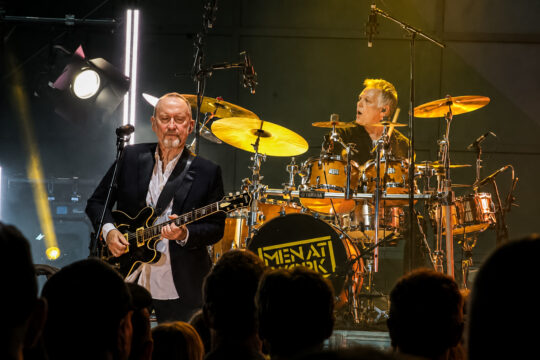
While Omaha’s MAHA Music Festival spent portions of the weekend battling rain and lightning delays that forced abbreviated performances elsewhere in the metro, the weather spared Stir Cove. By the time Men At Work took the stage, nothing stood between the crowd and one final trip backward through the decades. And this trip went farther back than the others. The performance marked an extraordinarily rare return to the Iowa/Nebraska region for Men At Work, roughly 43 years after the band’s Cargo era brought them through the area in 1983.
For me, Men At Work had always existed primarily through the songs that survived on radio. For much of the audience, clearly, that wasn’t the case. Songs I barely recognized were greeted by people around me who seemed to know every word.
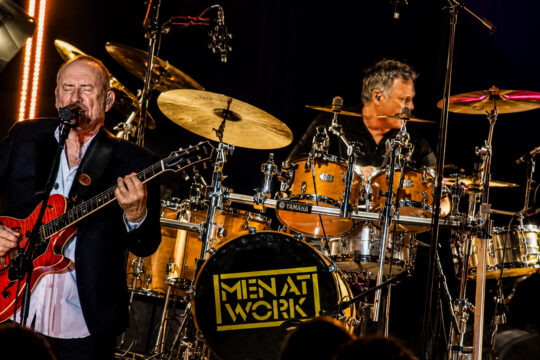
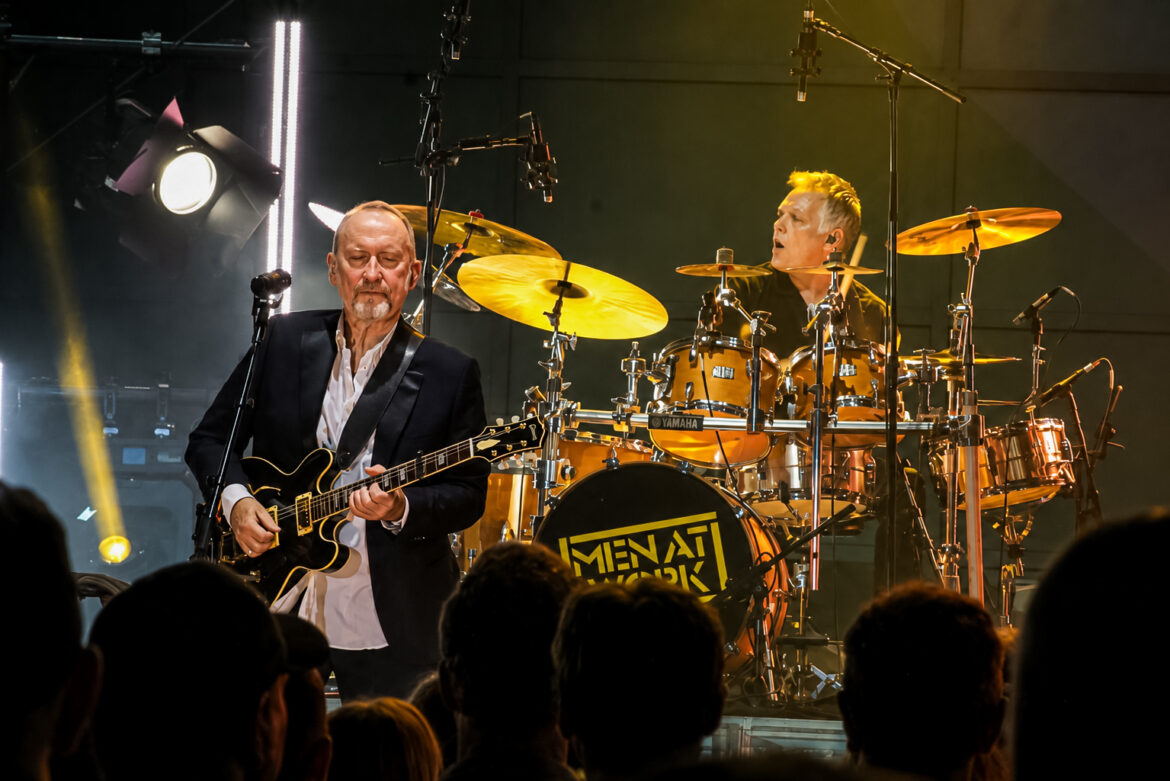
At the center of it all was Colin Hay vocalist, guitarist, founder and the sole original member of Men At Work — whose unmistakable voice remains the thread connecting the band’s early-’80s explosion to its modern incarnation.
The set also gave Hay room to step outside the Men At Work catalog with two songs from his solo career, “Can’t Take This Town” and “Looking for Jack.” Rather than feeling disconnected from the rest of the performance, they helped illustrate just how much music exists between the version of Hay many people remember from MTV and the musician standing in front of them more than four decades later.
But there was little question what much of the audience had been waiting to hear. As the evening approached its conclusion, the opening notes of “Who Can It Be Now?” unleashed one of the loudest reactions of the night. Then came “Down Under.” Some songs become permanently attached to the decade that produced them. Others somehow escape it. “Down Under” has done both.
More than forty years after becoming one of the defining songs of the early 1980s, it needed no introduction. Thousands of voices immediately joined Hay, and for those few minutes Stir Cove didn’t feel like a concert venue in Council Bluffs in 2026.
It could have been 1983.
Or 1993.
Or 2003.
Or any point in between. That ultimately became the beauty of the entire evening.
Shonen Knife connected the underground alternative world of the early 1990s to a younger generation discovering Japanese rock decades later. Toad the Wet Sprocket brought back songs that once poured from car stereos, cassette decks, CD players and alternative-radio stations. Men At Work reached even farther into the past, resurrecting melodies that helped define the earliest years of MTV and somehow still inspire thousands of people to sing together more than four decades later.
The crowd reflected all of it. Parents stood beside their children. People who remembered buying these albums when they were new stood alongside people born decades after their release. Some were reliving memories. Others were creating their first memories with songs that had already lived entire lifetimes before they ever heard them.
That may be the real measure of timeless music. Not whether a song can make you remember being young, but whether someone young today can hear that same song and find something of their own inside it.
On August 8 at Stir Cove, five decades of music briefly occupied the same moment. And none of it felt old.